
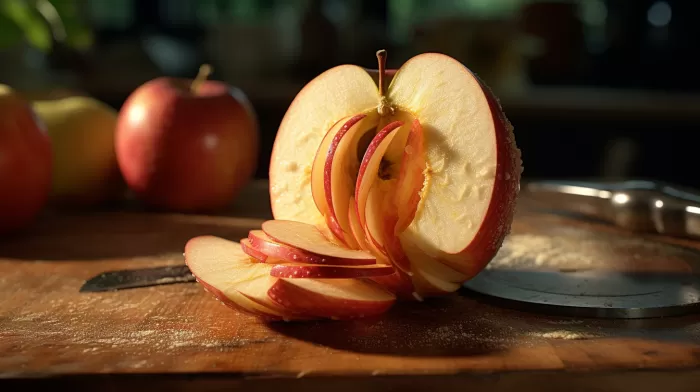
A small and inexpensive kitchen tool could make a significant difference in your heart health. According to research, using this tool for food can quickly and effectively improve your diet. It’s an apple slicer! A study from Cornell University shows that using an apple slicer can increase apple consumption by almost 75 percent.
Apples are known for their heart health benefits, and research has shown that consuming an apple a day can protect your heart just about as well as a statin drug. Therefore, investing in this simple kitchen utensil can prove invaluable for your cardiovascular health.
The Magic of Bite-sized Slices
The Cornell study reveals that the availability of bite-sized apple slices makes the fruit more appealing and desirable. The scientists believe that it’s more attractive to pop a small piece of fruit into your mouth than to bite into a whole fruit.
Whatever the motivation, the slicer seems to do the trick. In the long run, buying a slicer is quite a bit cheaper — and carries much less risk than coronary bypass surgery.
Less is More
Dr. Michael Cutler, author of Hushed-Up Natural Heart Cures and Deadly Deceptions of Popular Heart Treatments, emphasizes that a conservative approach is often better or just as effective as more aggressive approaches to heart disease. However, coronary bypass surgery for atherosclerosis (hardening of arteries) is big business in America, and doctors often recommend it long before considering lifestyle changes or less invasive procedures.
In reality, cardiologists perform more than 400,000 bypasses a year, fueling the $200 billion-a-year high-tech heart industry in the United States.
The Risks of Bypass Surgery
While bypass surgery aims to create a detour or “bypass” around clogged, hardened arteries to restore blood flow to your heart using veins grafted from other parts of your body, heart surgeons don’t always disclose the risks:
- Up to 85 percent of bypass surgeries are performed on patients who don’t meet the criteria for this surgery.
- In its journal, the American Medical Association admits that 44 percent of all coronary bypass surgeries are conducted for inappropriate reasons.
- As many as 50 percent of all bypass surgeries fail, requiring another bypass!
- Recuperation from this highly invasive surgery can take months, and some patients suffer lifetime impairments such as memory loss, chronic inflammation, and even depression!
- There’s no proof that bypass surgery does much more than relieve heart pain, except in 15 percent of patients with very specific heart problems.
- Up to 30 percent of vein grafts become blocked within one year.
- The risk of death from bypass surgery can be as high as 15 percent, according to the National Heart, Lung and Blood Institute.
These risks make bypass surgery a less than ideal option, especially when there are safer alternatives.
Alternatives to Bypass Surgery
Nobel Prize winner, Dr. Linus Pauling, suggested a method called chelation therapy, which might “end the need for bypass surgery.” Dr. Michael Cutler refers to it as “the bypass in a pill” and discusses it in his book.
Before going under the knife, it’s always wise to get a second opinion. It’s also a great idea to invest in an apple slicer. Moreover, discovering all the safe, natural options available that can help you take care of your heart is essential for maintaining good health.
Summing Up
Your kitchen may hold the key to improved heart health, and it’s as simple as a little tool called an apple slicer. By increasing your apple consumption, you can experience the heart health benefits that come with these fruits, possibly reducing your need for more invasive procedures down the line.
So why not invest in a little tool that could change your life for the better? When it comes to heart health, a small change like using an apple slicer may end up making a world of difference.