
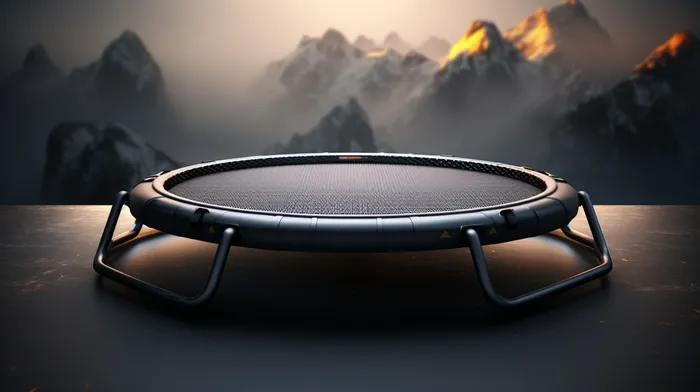
A mini-trampoline – also known as a rebounder – isn’t just for jumping up and down or jogging in place. With the right exercises, it’s an excellent tool for toning and strengthening the legs and developing dynamic stability in the core muscles of the low back, abs, and glutes. Incorporating these exercises into your routine can also serve as a warm-up or a standalone workout. Best of all, mini-trampoline workouts are low-impact, making them gentle on your feet and knees and suitable for those with joint issues.
Mini-trampoline Exercise 1: Ball Catch in Crunch Position
For this exercise, you’ll need a partner.
- Sit on the rebounder with your feet and back off the unit in a crunch position. This forces you to hold a crunch position, engaging your core muscles at all times.
- Your partner will have a ball (light or heavy, depending on your fitness level). They will toss it to you, and you’ll catch it and toss it back while maintaining the balanced crunch position.
- To develop core strength and balance during twisting and torqueing movements, your partner should toss the ball from different angles around you, which you’ll need to accommodate to catch and return.
- As a warm-up, try 10–20 repetitions. For a workout, aim for 3 sets of 20 catch-and-return repetitions.
Mini-trampoline Exercise 2: One-Legged Hops
This exercise is excellent for developing leg strength, core strength, endurance, and stability in the abs, glutes, and low back.
- Start on the mini-trampoline by gently hopping on one leg without pushing too hard to get higher in the air.
- Perform 20 hops on one leg and then switch to the other leg for an equal number of hops.
Since each side is developed individually, the load and stress placed on that side increases its fitness potential. This exercise is great for tennis players who have to hop to get the ball or any athlete seeking dynamic strength in movement. Aim for 3 sets of 30 seconds on each leg.
Mini-trampoline Exercise 3: Split Sprint
The split sprint exercise is excellent for developing speed and stability for quick, dynamic movements in different directions.
- Stand on the mini-trampoline with knees slightly bent and one leg in front of the other.
- Come up on your toes, like you might for sprinting, and jump, alternating lead legs.
For a more challenging workout, increase the speed and intensity of your split sprints. Try interval training by sprinting for short bursts followed by periods of rest or more relaxed bouncing.
Tips for Staying Safe on a Mini-Trampoline
As with any exercise, it’s essential to observe safety guidelines to avoid injuries when working out with a mini-trampoline. Here are a few tips:
- Make sure you properly warm up before starting your workout: Perform gentle bounces, stretch your muscles, and gradually increase the intensity of your warm-up.
- Ensure the trampoline is sitting on a level surface and has enough clearance space to avoid hitting walls or other objects.
- Stay centered on the trampoline while performing exercises.
- Wear appropriate footwear or go barefoot for a better grip on the surface.
- Listen to your body and modify exercises as needed.
Benefits of Mini-Trampoline Exercise
In addition to building core and leg strength, exercising on a mini-trampoline has several other health benefits:
- Improved cardiovascular fitness: Rebounding exercises can increase heart rate and improve overall cardiovascular health.
- Enhanced balance and coordination: Exercising on an unstable surface like a mini-trampoline helps you develop better balance, coordination, and body awareness.
- Increased lymphatic circulation: Rebounding exercises may stimulate lymphatic circulation, helping your immune system function at peak efficiency.
- Stress relief: Bouncing on a mini-trampoline offers a fun, engaging way to reduce stress and release feel-good endorphins.
Don’t underestimate the power of a mini-trampoline workout. It’s an effective, low-impact way to build core and leg strength, improve overall fitness, and have fun while doing it. Give these exercises a try and feel the difference in your workouts and day-to-day life.